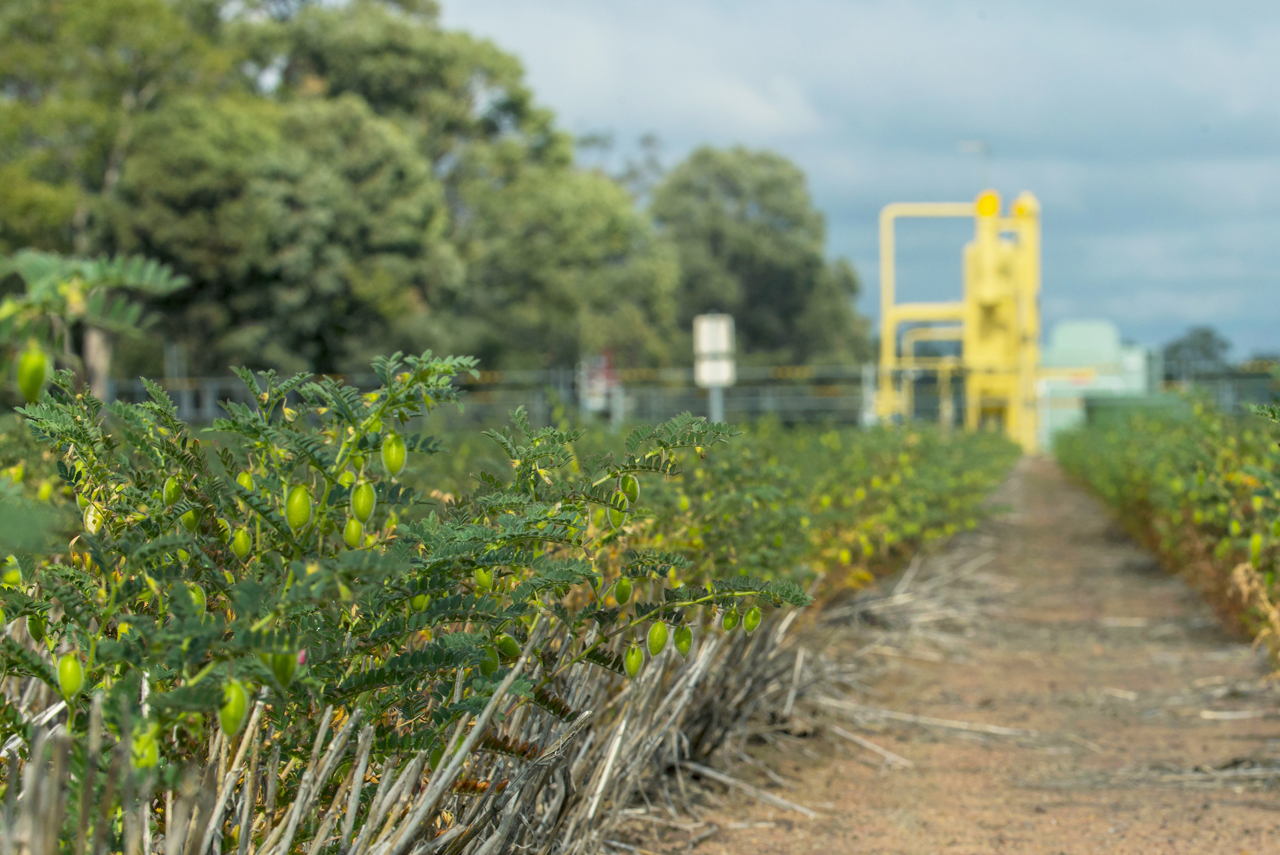
The Condamine Alluvium is an important groundwater resource that supports farming, communities and agricultural production across the Darling Downs.
On 29 June 2026, Queensland’s laws changed to introduce further protections for the Condamine Alluvium and clarify and expand some landholder rights where coal seam gas (CSG) activity occurs in the area.
The reforms are made through the Regional Planning Interests (Condamine Alluvium) and Other Legislation Amendment Act 2026 (RPI(CA)OLA Act 2026).
They make changes to four Queensland laws:
- the Regional Planning Interests Act 2014 (RPI Act)
- the Regional Planning Interests Regulation 2014 (RPI Regulation)
- the Environmental Protection Act 1994 (EP Act)
- the Mineral and Energy Resources (Common Provisions) Act 2014 (MERCP Act).
This page explains how the changes may apply to your land and where to go for more information.
At a glance
The reforms:
- retain the existing Regional Interests Development Approval (RIDA) process for CSG activities in the area
- introduce a new legal condition to protect water quality from new CSG wells
- clarify and expand compensation rights where CSG-induced subsidence affects agricultural activities or productivity
- require an agreement before new wells are drilled beneath private land
- provide options for resolving subsidence compensation disputes
- introduce a map showing where the new rules apply.
The reforms apply only within the mapped Condamine Alluvium CSG area.
Use the map below to check whether your property or nearby resource activity may be affected.
View the Condamine Alluvium CSG area map
Download the Shapefile data
More information about the Condamine Alluvium CSG area
Does this apply to me?
The reforms may be relevant if your private land is within the Condamine Alluvium CSG area and:
- CSG activity is proposed or has already occurred on or underneath your land
- new directional drilling is proposed beneath your land
- you believe CSG-induced subsidence may be affecting your agricultural activities or productivity and your land is:
- used to access a CSG resource authority
- within 5 kilometres of a CSG resource authority that is wholly or partly in the Condamine Alluvium CSG area.
The Condamine Alluvium CSG area is largely within the Toowoomba, Western Downs and Southern Downs local government areas.
The rules can differ depending on the location of your land, the type and timing of the proposed activity, and any existing agreements.
For advice about your individual circumstances, consider contacting the relevant Queensland Government department listed at the bottom of this page, seeking independent legal advice, or speaking with Coexistence Queensland about available information and support.
The RIDA process remains in place
A Regional Interests Development Approval, or RIDA, is required before certain resource activities can proceed in an area of regional interest, unless the activity is being undertaken in accordance with a relevant exemption under the RPI Act.
For CSG activities in the Condamine Alluvium CSG area, the RIDA process has been retained. This means the existing framework continues to assess and manage relevant impacts on matters including priority agricultural areas, strategic cropping areas, regionally significant water sources, priority living areas and strategic environmental areas.
If a proposed CSG activity requires a RIDA, the approval process sits alongside other requirements, including environmental authority and land access requirements.
The reforms also do not:
- automatically reopen existing CCAs or voluntary compensation agreements
- replace the existing process for managing impacts on private water bores under the Water Act 2000
- remove existing land access, compensation or dispute resolution rights
- apply to every property in the broader Condamine Alluvium – they apply only within the mapped Condamine Alluvium CSG area and according to the relevant legal criteria.
The changes in more detail
Changes to the EP Act mean a new legal requirement, known as a deemed condition, now applies automatically to certain new CSG wells in the Condamine Alluvium CSG area.
In simple terms, the condition prohibits contaminants being released into waters in the Condamine Alluvium CSG area through the operation of a well where this would result in water quality that does not meet the applicable water quality objectives.
Because this is a requirement set in legislation, it applies automatically. It does not need to be written separately into each environmental authority.
The condition applies to:
- new environmental authorities for CSG activities in the Condamine Alluvium CSG area, and
- certain new wells included in an environmental authority amendment application lodged and decided after the reforms commenced.
It does not apply to wells already authorised before the reforms commenced, or to wells covered by an application that had already been lodged at that time.
The MERCP Act changes clarify that a CSG resource authority holder may be liable to compensate an eligible landholder where CSG-induced subsidence:
- affects the ability to carry out agricultural activities, or
- reduces the productivity of agricultural activities.
This sits within the existing land access and compensation framework.
The changes may apply to private land in the Condamine Alluvium CSG area that is:
- covered by a CSG resource authority
- access land for a CSG resource authority, or
- within 5 kilometres of a CSG resource authority that is wholly or partly in the Condamine Alluvium CSG area.
These categories are not mutually exclusive – that is, a property might be covered by a CSG resource authority (or access land) and within 5 kilometres of a different CSG resource authority.
Where only part of a property falls within the Condamine Alluvium CSG area or the 5-kilometre distance, the changes apply only to that part of the property.
The changes do not require existing CCAs or voluntary agreements to be renegotiated. If you had a CCA with a CSG resource authority holder before 29 June 2026 and it applied to the holder’s compensation liability, the CCA will be taken to also apply to the holder’s subsidence compensation liability.
Landholders may wish to seek independent advice about whether a pre-29 June 2026 CCA covers subsidence compensation liability.
Under the changes to the MERCP Act, new directional drilling beneath private land in the Condamine Alluvium CSG area is now considered an advanced activity.
This means the CSG resource authority holder must generally have a conduct and compensation agreement (known as a CCA) in place before carrying out the activity.
However, A CCA won’t be required if, before 29 June 2026, the landholder and resource authority holder already had another agreement in place that included payment for the drilling.
Where compensation is being discussed as part of a CCA negotiation, the existing dispute resolution options continue to apply. These may include a conference with an authorised officer from the Department of Natural Resources and Mines, Manufacturing, Regional and Rural development, mediation with the Land Access Ombudsman, arbitration, or a Land Court determination.
Where there is no CCA negotiation underway, a landholder or CSG resource authority holder may be able to request a conference with an authorised officer or apply to the Land Court in relation to a CSG-induced subsidence compensation dispute.
Where to get more information
Department of State Development, Infrastructure and Planning (DSDIP)
Department of the Environment, Tourism, Science and Innovation (DETSI)
Department of Natural Resources and Mines, Manufacturing, and Regional and Rural Development (DNRMMRRD)
Land Access Ombudsman
The Land Access Ombudsman (LAO) provides free, fair, and independent services to help landholders and resource companies investigate disputes and resolve land access matters in Queensland.
- Land access negotiations and disputes
- Make good agreements (MGAs)
- Conduct and compensation agreements (CCAs)
Land Court of Queensland
The Land Court of Queensland is considered the ‘last resort’ for a legal ruling on property disputes and offers a number of alternative dispute resolution options.
Services include:
- Procedural Assistance Service
- Facilitated conferencing of parties
- Mediation by court officers or qualified convenors
- Expert ADR panel
- ADR referral opportunities even when a case is being heard in the Land Court.
Coexistence Queensland
Coexistence Queensland provides independent information and practical resources to help landholders understand land access, negotiation and coexistence issues. We do not provide legal advice or make regulatory decisions.