Resources
On this page
Coexistence Queensland values the collaborative efforts of numerous organisations that play a part in contributing valuable resources which align with our mission of fostering sustainable coexistence between landholders, communities, and the energy and resources industries. We acknowledge and appreciate the resources and information provided, which play a crucial role in informing and supporting our work.
Gas
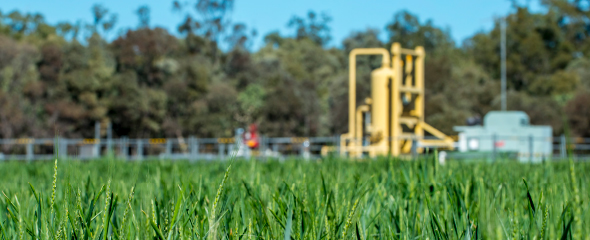
Extraction of natural gas from wells drilled into underground reservoirs located on land.
The Queensland Energy Roadmap 2025 outlines how the Queensland Government plans to manage existing energy assets while guiding investment in new generation and storage. It gives a clearer view of how future projects may be planned, coordinated and timed across different regions.
This guide has been prepared to assist landholders and resource companies in understanding Queensland’s land access laws as provided in the Mineral and Energy Resources (Common Provisions) Act 2014 and how they relate to the exploration and development of Queensland’s mineral and energy resources on private land.
The Land Access Code sets out best practice guidelines for communicating and negotiating with landholders, and imposes mandatory conditions about conduct when entering and carrying out authorised activities on private land.
The Queensland Government’s regulatory framework protects landholders, communities and the environment while facilitating the establishment of a sustainable onshore petroleum and gas industry.
Working on the land can affect your health, both physically and mentally. If you or someone you know are in need of support, there are countless services available across numerous platforms (via phone, online, face-to-face).
See examples of the feedback we’ve submitted to government and non-government entities on policy positions that focus on managing and improving the sustainable coexistence of Queensland landholders, rural and regional communities, and the resources and energy sectors.
- October 2025 | Energy Roadmap Amendment Bill 2025 Submission
Submission to the Queensland Government on the Energy Roadmap Amendment Bill 2025, with feedback on proposed amendments relating to Regional Energy Hubs and a renewable energy developer Code of Conduct. - November 2023 | Australian Government Future Gas Strategy Consultation Paper
Response to the Australian Government with a focus on the Commission’s experience in facilitating sustainable coexistence between landholders, regional communities and the onshore gas industry. - August 2023 | Lake Eyre Basin Consultation Regulatory Impact Statement
Formal response to the Department of Environment and Science on its regulatory impact statement. The regulatory impact statement focuses on ensuring Queensland’s environmental protections achieve a balance between ecological sustainability and future economic prosperity for the region. - June 2023 | IESC’s Draft Information Guidelines Explanatory Note: Subsidence Associated with Coal Seam Gas Production
General feedback provided to the Independent Expert Scientific Committee (IESC) to ensure the explanatory note was fit for purpose in the context of the Commission stakeholders ability to access and consume the information. - February 2023 | Improving Queensland’s Land Release Process Discussion Paper
Formal response to the Department of Resources’ discussion paper with proposed refinements to the land release process. - February 2023 | A Review of Coexistence Principles and Coexistence Institutions Discussion Paper
Formal response to the Department of Resources’ discussion paper with information relating to the Commission’s experience in the areas of land access and coexistence. - May 2022 | Draft Coal Seam Gas (CSG) Brine Management Action Plan 2022-2032
Formal response with recommendations for the Department of Environment and Science to consider factors that may enhance some elements of the draft plan. - February 2022 | Draft Queensland Resources Industry Development Plan (QRIDP)
Formal response to the Department of Resources’ draft plan with specific feedback on proposed actions and the Commission’s response to consultation questions.
The On New Ground Report was published in June 2017 and details our experiences dealing with governments, onshore gas developers, rural landholders and communities who either by design or coincidence played integral roles in the most significant resource development story in Australia’s recent history.
Shared Landscapes demonstrates how two primary industries, gas and agriculture, operate side by side on the one landscape, while both making significant contributions to Queensland’s economy.
Hydrogen
An energy carrier produced by splitting water molecules through electrolysis or from natural gas reforming and used for transportation or power generation.

Produced by the Queensland Renewable Energy Council, this toolkit provides practical guidance for developers and investors on leading practice engagement and benefit sharing with landholders, First Nations and communities in Queensland. It is intended for developers and investors seeking consolidated information to support project planning, approvals, land access and delivery.
The Queensland Energy Roadmap 2025 outlines how the Queensland Government plans to manage existing energy assets while guiding investment in new generation and storage. It gives a clearer view of how future projects may be planned, coordinated and timed across different regions.
Application of this toolkit is most relevant during the feasibility phase of a project, prior to final site selection and design. It also provides an overview of regulatory approvals information in Queensland.
Working on the land can affect your health, both physically and mentally. If you or someone you know are in need of support, there are countless services available across numerous platforms (via phone, online, face-to-face).
Minerals
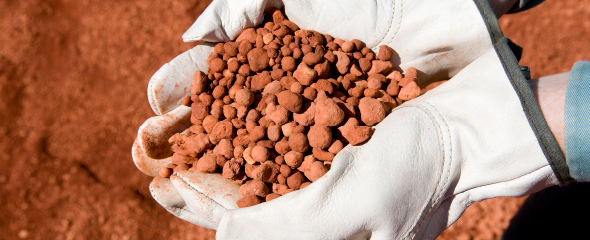
The prospecting, exploration and extraction of mineral resources including coal and critical minerals.
The Queensland Energy Roadmap 2025 outlines how the Queensland Government plans to manage existing energy assets while guiding investment in new generation and storage. It gives a clearer view of how future projects may be planned, coordinated and timed across different regions.
This guide has been prepared to assist landholders and miners to understand compensation obligations for the grant and renewal of mining claims, mining leases, and related access land. Land owners entitled to compensation include owners of freehold land, Land Act 1994 lessees, trustees of reserves, and lessees under the Aboriginal and Torres Strait Land Holding Act 2013.
This guide has been prepared to assist landholders and resource companies in understanding Queensland’s land access laws as provided in the Mineral and Energy Resources (Common Provisions) Act 2014 and how they relate to the exploration and development of Queensland’s mineral and energy resources on private land.
The Queensland Critical Minerals Strategy builds on the Queensland Resources Industry Development Plan (QRIDP), which provides a 30-year roadmap to ensure Queensland’s resources industry continues to create jobs and prosperity for generations to come, and brings clear focus to the development of a critical minerals sector.
The Land Access Code sets out best practice guidelines for communicating and negotiating with landholders, and imposes mandatory conditions about conduct when entering and carrying out authorised activities on private land.
The ESG Toolbox aims to help explorers navigate growing expectations and understand, improve and communicate their ESG credentials.
The Small Scale Mining Code provides guidelines and conditions to assist small scale miners conduct their activities and manage the land in a way that ensures the landscape upon which they work is kept in a reasonable state for current and future use.
Working on the land can affect your health, both physically and mentally. If you or someone you know are in need of support, there are countless services available across numerous platforms (via phone, online, face-to-face).
Pumped hydro
Using surplus electricity to pump water uphill to a reservoir, which can later be released downhill through turbines to generate electricity.
Produced by the Queensland Renewable Energy Council, this toolkit provides practical guidance for developers and investors on leading practice engagement and benefit sharing with landholders, First Nations and communities in Queensland. It is intended for developers and investors seeking consolidated information to support project planning, approvals, land access and delivery.
The Queensland Energy Roadmap 2025 outlines how the Queensland Government plans to manage existing energy assets while guiding investment in new generation and storage. It gives a clearer view of how future projects may be planned, coordinated and timed across different regions.
The Social licence in renewable energy toolkit for Local Government provides practical guidance for industry, government, and project proponents to understand and strengthen their social licence to operate. Developed by the Queensland Department of State Development and Infrastructure, the toolkit outlines principles, tools, and case studies to support respectful, transparent, and effective community engagement.
Working on the land can affect your health, both physically and mentally. If you or someone you know are in need of support, there are countless services available across numerous platforms (via phone, online, face-to-face).
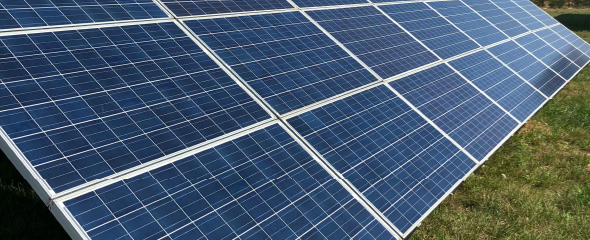
Solar
Large-scale solar panel installations that capture sunlight to convert into electricity.
Produced by the Queensland Renewable Energy Council, this toolkit provides practical guidance for developers and investors on leading practice engagement and benefit sharing with landholders, First Nations and communities in Queensland. It is intended for developers and investors seeking consolidated information to support project planning, approvals, land access and delivery.
The Queensland Energy Roadmap 2025 outlines how the Queensland Government plans to manage existing energy assets while guiding investment in new generation and storage. It gives a clearer view of how future projects may be planned, coordinated and timed across different regions.
The Social licence in renewable energy toolkit for Local Government provides practical guidance for industry, government, and project proponents to understand and strengthen their social licence to operate. Developed by the Queensland Department of State Development and Infrastructure, the toolkit outlines principles, tools, and case studies to support respectful, transparent, and effective community engagement.
This Clean Energy Council guide describes how network connections are developed for new energy generation facilities, and outlines expectations on how the proponents and contractors involved in building them should engage with communities throughout the process.
The Queensland Solar Farm Guidelines have been prepared to help industry to work with community and stakeholders to achieve positive outcomes as the large-scale solar sector develops.
Working on the land can affect your health, both physically and mentally. If you or someone you know are in need of support, there are countless services available across numerous platforms (via phone, online, face-to-face).
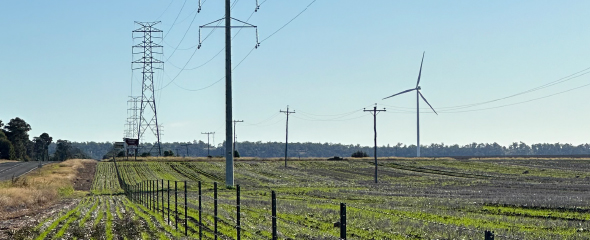
Transmission
The transportation of electricity over long distances using overhead powerlines supported by towers.
Produced by the Queensland Renewable Energy Council, this toolkit provides practical guidance for developers and investors on leading practice engagement and benefit sharing with landholders, First Nations and communities in Queensland. It is intended for developers and investors seeking consolidated information to support project planning, approvals, land access and delivery.
The Queensland Energy Roadmap 2025 outlines how the Queensland Government plans to manage existing energy assets while guiding investment in new generation and storage. It gives a clearer view of how future projects may be planned, coordinated and timed across different regions.
The Social licence in renewable energy toolkit for Local Government provides practical guidance for industry, government, and project proponents to understand and strengthen their social licence to operate. Developed by the Queensland Department of State Development and Infrastructure, the toolkit outlines principles, tools, and case studies to support respectful, transparent, and effective community engagement.
This Clean Energy Council guide describes how network connections are developed for new energy generation facilities, and outlines expectations on how the proponents and contractors involved in building them should engage with communities throughout the process.
This webpage provides information on the type of activities that can and can’t be undertaken on or near Powerlink easements, maintenance works as well as terms and conditions.
The Land Access Protocol brochure informs landholders and stakeholders about the standards and commitments Powerlink and its representatives will adhere to when accessing properties to provide a high voltage transmission service.
The Queensland Solar Farm Guidelines have been prepared to help industry to work with community and stakeholders to achieve positive outcomes as the large-scale solar sector develops.
Working on the land can affect your health, both physically and mentally. If you or someone you know are in need of support, there are countless services available across numerous platforms (via phone, online, face-to-face).
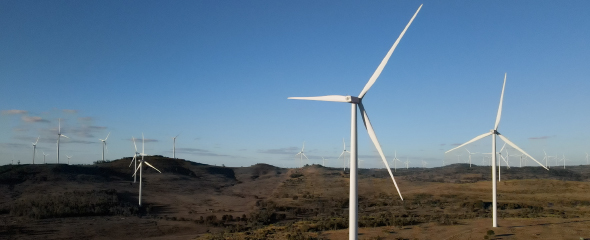
Wind
Wind turbines arranged in an open area to generate electricity from wind energy.
Produced by the Queensland Renewable Energy Council, this toolkit provides practical guidance for developers and investors on leading practice engagement and benefit sharing with landholders, First Nations and communities in Queensland. It is intended for developers and investors seeking consolidated information to support project planning, approvals, land access and delivery.
The Queensland Energy Roadmap 2025 outlines how the Queensland Government plans to manage existing energy assets while guiding investment in new generation and storage. It gives a clearer view of how future projects may be planned, coordinated and timed across different regions.
The Social licence in renewable energy toolkit for Local Government provides practical guidance for industry, government, and project proponents to understand and strengthen their social licence to operate. Developed by the Queensland Department of State Development and Infrastructure, the toolkit outlines principles, tools, and case studies to support respectful, transparent, and effective community engagement.
This Clean Energy Council guide describes how network connections are developed for new energy generation facilities, and outlines expectations on how the proponents and contractors involved in building them should engage with communities throughout the process.
Working on the land can affect your health, both physically and mentally. If you or someone you know are in need of support, there are countless services available across numerous platforms (via phone, online, face-to-face).
If you cannot find the resources you are looking for, or if you need more information, please contact us.